



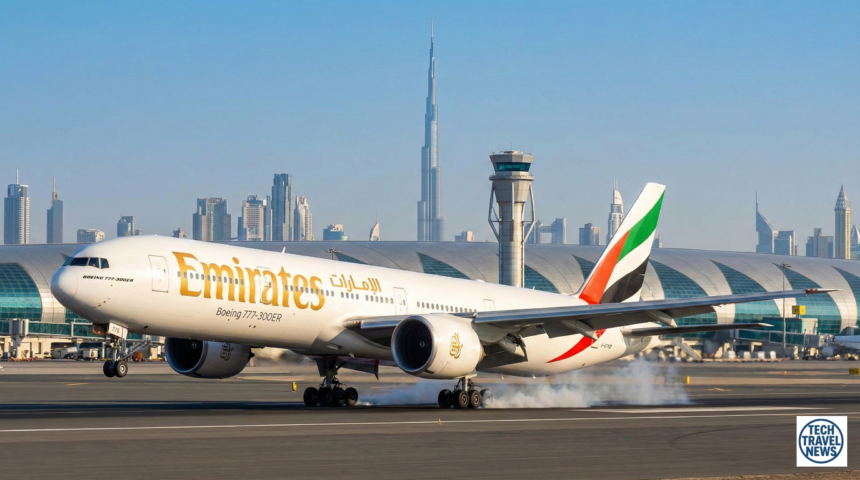
As the aviation industry approaches 2026, the prevailing sentiment is no longer just about post-pandemic recovery—it’s about navigating a complex new reality. In a recent report and podcast episode titled “Airlines in 2026: Flying Into Trouble?”, the team at Skift’s Airline Weekly—featuring Senior Analyst Jay Shabat, Editor Gordon Smith, and Reporter Meghna Maharishi—unpacked the critical forces that will shape the skies in the coming year.
Released in late November 2025, the discussion serves as a crucial primer for the industry, moving beyond simple “boom or bust” narratives to explore the nuanced challenges facing global carriers.
The Strategic Crossroads: “Complicated” is the New Normal
The core takeaway from the report is that while demand remains robust in many sectors, the supply side is fraught with friction. The industry is effectively at a strategic crossroads where success depends on how well airlines manage external pressures that are largely out of their control.
Key among these pressures is volatile fuel pricing, which continues to wreak havoc on operating margins. Coupled with this is the persistent issue of capacity constraints. The report highlights that delayed aircraft deliveries—stemming from ongoing production issues at major manufacturers like Boeing and Airbus—are severely limiting growth strategies. Airlines that planned for aggressive expansion in 2026 are finding themselves with fewer jets than anticipated, forcing a rethink of network deployment.
The Great Divergence: US vs. Europe


One of the most striking insights from the podcast is the diverging fortunes of Ultra-Low-Cost Carriers (ULCCs). The report identifies a “puzzling trend”:
Europe: Budget carriers are soaring, capitalizing on leisure demand and efficient operations to capture significant market share.
United States: Their American counterparts are stumbling. The US market is seeing a reshaping of cost structures that has made it difficult for ULCCs to maintain their traditional price advantage.
The analysts point to the aggressive expansion of “Basic Economy” fares by legacy network carriers in the US as a major factor. By effectively segmenting their cabins to compete on price while offering superior schedules and loyalty perks, major US airlines are squeezing the bottom end of the market more effectively than their European peers.



Shifting Demand and The Loyalty War
Looking toward 2026, the “revenge travel” phenomenon has fully subsided, replaced by shifting demand patterns. The report notes that while labor challenges—a massive headache in 2023 and 2024—are finally easing, the battleground has shifted to loyalty programs.
The podcast emphasizes that loyalty strategies are evolving differently across continents. In North America, loyalty programs have become high-margin financial engines, sometimes valued more highly than the airline operations themselves. In contrast, other markets are still treating loyalty primarily as a tool for customer retention rather than a standalone profit center.
Conclusion: Turbulence Ahead?
Is the industry flying into trouble? The consensus from Airline Weekly is a cautious “yes and no.” The trouble isn’t a collapse in demand, but a squeeze on profitability caused by high costs and supply chain paralysis. As we head into 2026, the winners will likely be the carriers with the most resilient balance sheets and the flexibility to adapt their networks to a world where new planes are scarce and fuel prices remain unpredictable.